4 tricks to keep slugs out of your garden without chemicals

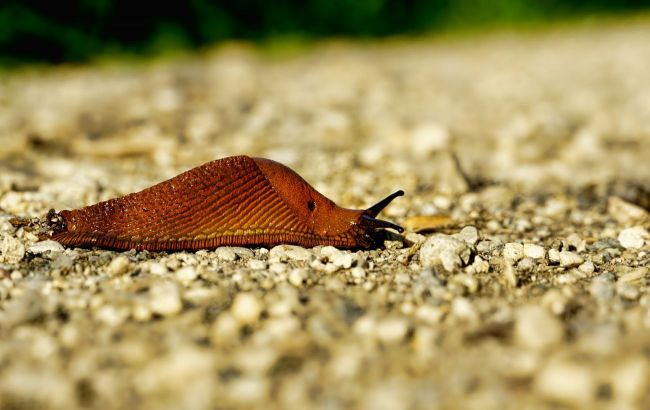 How to get rid of slugs in your garden (photo: Pixabay)
Slugs can seriously damage garden crops in just a few nights, especially young plants. They love moisture, hide during the day, and come out at night to search for food, leaving holes in leaves and a characteristic silvery trail behind.
RBC-Ukraine explains how to protect your garden beds from slugs with simple, home-based remedies.
Why slugs are dangerous for your garden
Slugs are omnivorous gastropods that can damage both plant leaves and fruit. Young and tender plants are particularly attractive to them.
They may feed on lettuce, cabbage, beets, carrots, peppers, eggplants, and other vegetables. These pests can also damage strawberries, tomatoes, zucchini and fruit growing close to the ground.
Slugs are most active in wet weather and at night.
How to tell if you have slugs in your garden
You don't always have to wait until your plants are badly damaged. Look for several characteristic signs:
- large, irregular or ragged holes in leaves
- damaged young shoots
- fruit that has been eaten and is touching the ground
- shiny, silvery trails on plants and soil
- increased pest activity in wet weather and after sunset.
To reduce the risk of slugs appearing, it is also important not to create unnecessary damp hiding places in your garden beds. Remove boards, stones, dense plant debris and other places where slugs can hide during the day.
Garlic solution for slugs
One simple traditional method of protecting plants is to prepare a garlic solution. The strong smell of garlic may repel slugs, so the solution can be applied to plants and the soil around them.
You will need:
- 2 liters of water
- 2 heads of garlic.
How to prepare the remedy
- Peel the garlic cloves, place them in a saucepan, and cover with 2 liters of water.
- Boil the garlic until soft.
- Mash the cooked cloves with a fork to release as much juice as possible.
- Strain the resulting concentrate through a sieve or cheesecloth.
- Measure 2 tablespoons of the garlic solution and dilute it in 5 liters of water.
- Pour the mixture into a spray bottle or watering can.
The resulting solution can be sprayed onto plants or used to water them. It is recommended to repeat the treatment about once a week, as well as after heavy rain.
What else can you sprinkle around garden beds to keep slugs away
If you don't want to rely only on garlic, there are other simple ways to make the area less comfortable for these pests.
Pine or spruce needles
Pine or spruce needles can be spread around plants or used as mulch. This creates a less comfortable surface for slugs to move across.
This method can be particularly useful around strawberries. An additional benefit is that the needles eventually decompose and become part of the organic layer of the soil.
Dried nettles
Another traditional method is to spread dried nettles around plants.
They can be used around tomato, pepper and eggplant bushes. Make sure there is enough dried foliage to create a protective barrier around the plants.
Sunflower husks
Sunflower husks can also be used to protect garden beds. They dry quickly after rain and create a dry, loose layer on the soil surface.
When the particles come into contact with a slug's moist body, they can stick to it and make it more difficult for the pest to move. As a result, the slug may look for another place to feed.
It's worth noting that traditional remedies do not guarantee complete elimination of slugs, so they are best used as part of a comprehensive garden protection strategy. If there are a lot of pests, it is worth combining manual removal, keeping garden beds tidy and other permitted pest-control methods.