Spain’s socialists on the edge of defeat: what a right-wing victory could mean for Ukraine


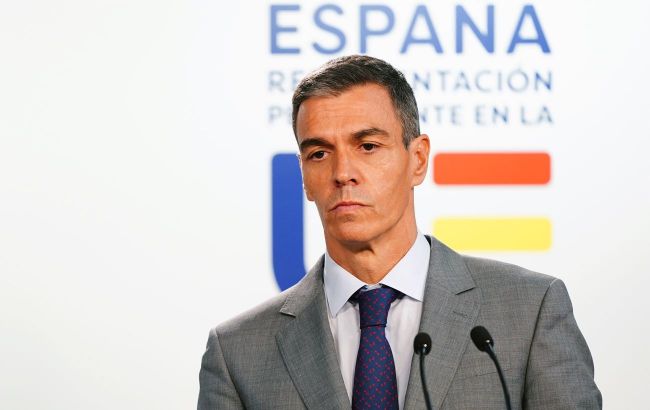 Photo: Pedro Sánchez (Getty Images)
Today, November 29, Spain is holding an early parliamentary election. The vote will determine whether the Socialist Party, led by Pedro Sánchez, retains power.
Why the socialists are in a weak position this time, what chances the far right has of coming to power, and what this means for Ukraine — read in the RBC-Ukraine article.
Key points:
-
Why the election was called early: Spain went to an early election because of a political crisis triggered by the problem of expensive housing.
-
Sánchez’s motives: The incumbent prime minister dissolved parliament to secure a new mandate of confidence and strengthen his position.
-
The opposition’s strategy: Right-wing parties are capitalizing on fatigue with eight years of socialist rule and corruption scandals involving Sánchez’s inner circle.
-
Continued uncertainty: Neither camp currently has a significant advantage, but the opposition has better chances of success.
Under the schedule, Spain’s next parliamentary election was supposed to take place only next year. However, incumbent Prime Minister Pedro Sánchez decided not to wait and called an early vote.
The trigger was a domestic political crisis. The Congress of Deputies — the lower house of Spain’s parliament — failed to approve two government decrees on housing policy. The socialists, together with their coalition partners, had prepared the measures amid public outrage that erupted after an 87-year-old Madrid resident was evicted for failing to pay rent.
Read also: Protests in Barcelona escalate into violent clashes: More than 120 detained
This is the story of Maricarmen Abascal. The elderly woman had to leave the home where she had lived for seven decades. After the property was acquired by a private company, the rent soared by 275% — to as much as 2,650 euros per month. This sparked a wave of protests, first in Madrid and then in more than 50 other cities.
Skyrocketing prices for renting and buying property have long been Spaniards’ number one concern, both socially and politically. Housing costs in Spain’s major cities are hitting record highs, largely because of tourism. Renting property to visitors is far more profitable than renting it to residents.
In recent years, Sánchez’s government has tried to address the problem but has achieved only partial results for several reasons.
Demand for short-term rentals and investment properties has continued to fuel the market, while the pace of new construction has failed to keep up with the needs of major cities. In addition, housing initiatives in Spain often stall because of disagreements between the central government and regions, which have their own powers in this area and take different approaches to market regulation.
Against the backdrop of the recent wave of protests, the government prepared the two aforementioned decrees in an attempt to urgently take the initiative away from the protesters.
Who is running against whom
Spain is a parliamentary constitutional monarchy. The king is nominally the head of state, but all political power rests with parliament and the government.
For eight years, the country’s government has been led by Pedro Sánchez, head of the Spanish Socialist Workers’ Party. In the current parliament, his party and its coalition partner, the left-wing Sumar bloc, do not have a majority but rely on outside support from regional forces and left-wing allies.
They are opposed by the right: the conservative People’s Party (PP), led by Alberto Núñez Feijóo, and the far-right Vox (“Voice”), led by Santiago Abascal. The two parties form the parliamentary opposition.
According to a poll by 40dB, the People’s Party could win 127–136 of the 350 seats (31.8%). The ruling socialists are close behind, with 116–127 seats (30.9%), while Vox is in third place with 51–61 seats (17.3%).
As for Ukraine, under the current socialist government, Spain has consistently provided Kyiv with around 1 billion euros in military aid annually and accepted nearly 360,000 Ukrainians. At the same time, Madrid refuses to provide or sell ammunition for Patriot air defense systems, despite still having some stockpiles in the country.
The People’s Party has also pledged in its platform to continue political, financial, humanitarian and defense support for Ukraine, along with sanctions against Russia, focusing on coordination with the EU and US.
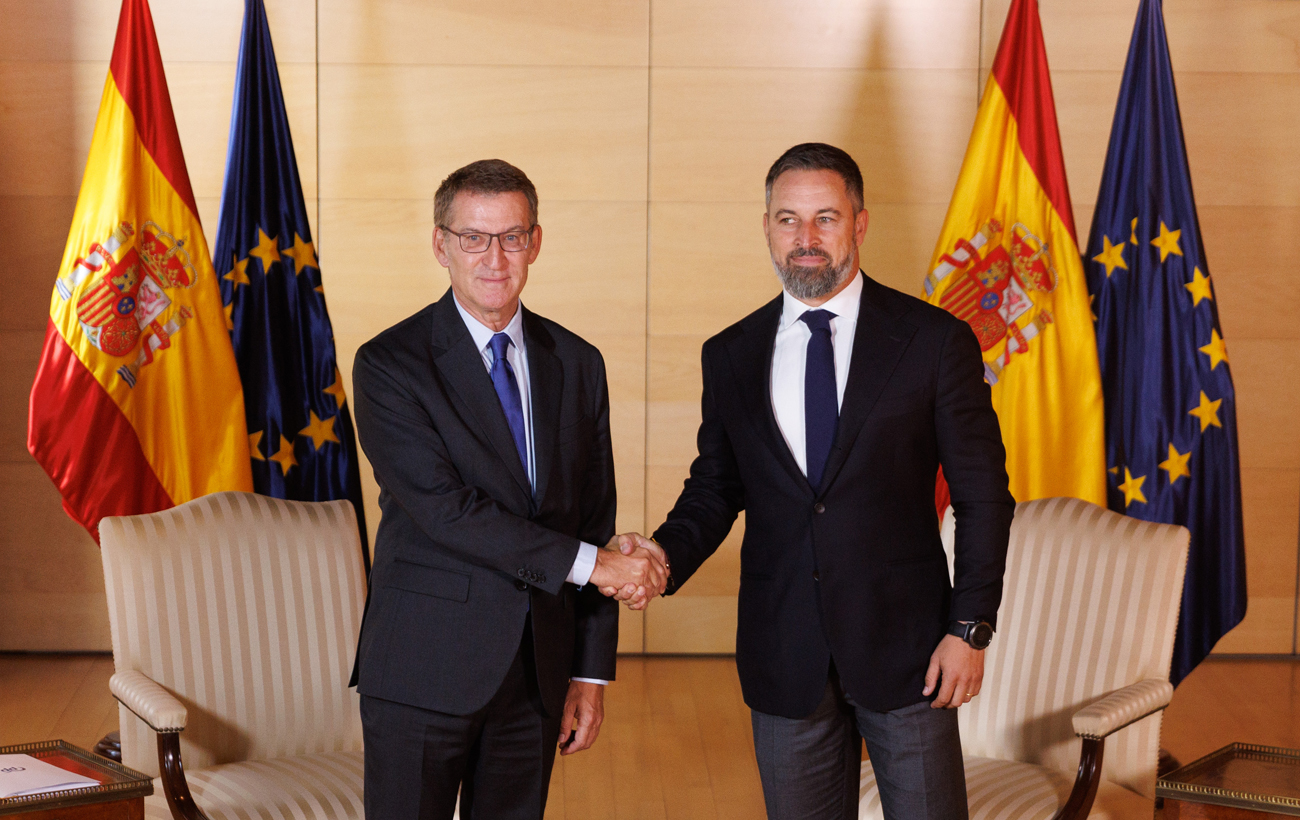
Photo: Leaders of the right-wing opposition, Alberto Núñez Feijóo and Santiago Abascal (Getty Images)
Read also: Spain and Greece decline to send aging Patriot missiles to Ukraine
Meanwhile, the position of the far-right Vox party remains more uncertain. The party has not included Ukraine in its election platform, but it criticizes Brussels’ policies and has repeatedly abstained from votes in the European Parliament on increasing aid to Kyiv.
Even though PP and Vox together receive less than half of the votes, the specifics of Spain’s electoral system allow large parties to win a greater share of seats in Congress than their nationwide percentage of support.
Thus, the People’s Party and Vox could secure a majority and remove Sánchez from power. If that happens, the last prominent left-wing government in the European Union would disappear. So why did the prime minister take the risk of dissolving parliament?
Sánchez’s motives
The prime minister’s decision to call an early election was, on the one hand, forced. On the other, it involved a calculated political move.
First, a way out of the parliamentary deadlock is needed. The failure of the housing decrees finally showed that the current Congress of Deputies had become dysfunctional. By calling an election, Sánchez effectively turned his parliamentary defeat into an argument for why he needs a new mandate of confidence from the public.
“To do more, we need to renew people’s support. We need a much broader progressive majority,” he said in a speech announcing the dissolution of parliament.
The socialists are also playing on fears of the far right. Sánchez used a similar scenario in 2023. Back then, he also called an early election as an underdog, when polls predicted a right-wing victory, but managed to mobilize voters by warning of a PP–Vox coalition and stay in power.
In addition, the short campaign period — just 54 days — works in the socialists’ favor within the left-wing camp: smaller and fragmented left-wing projects do not have time to build momentum, forcing voters to rally around Sánchez’s party.
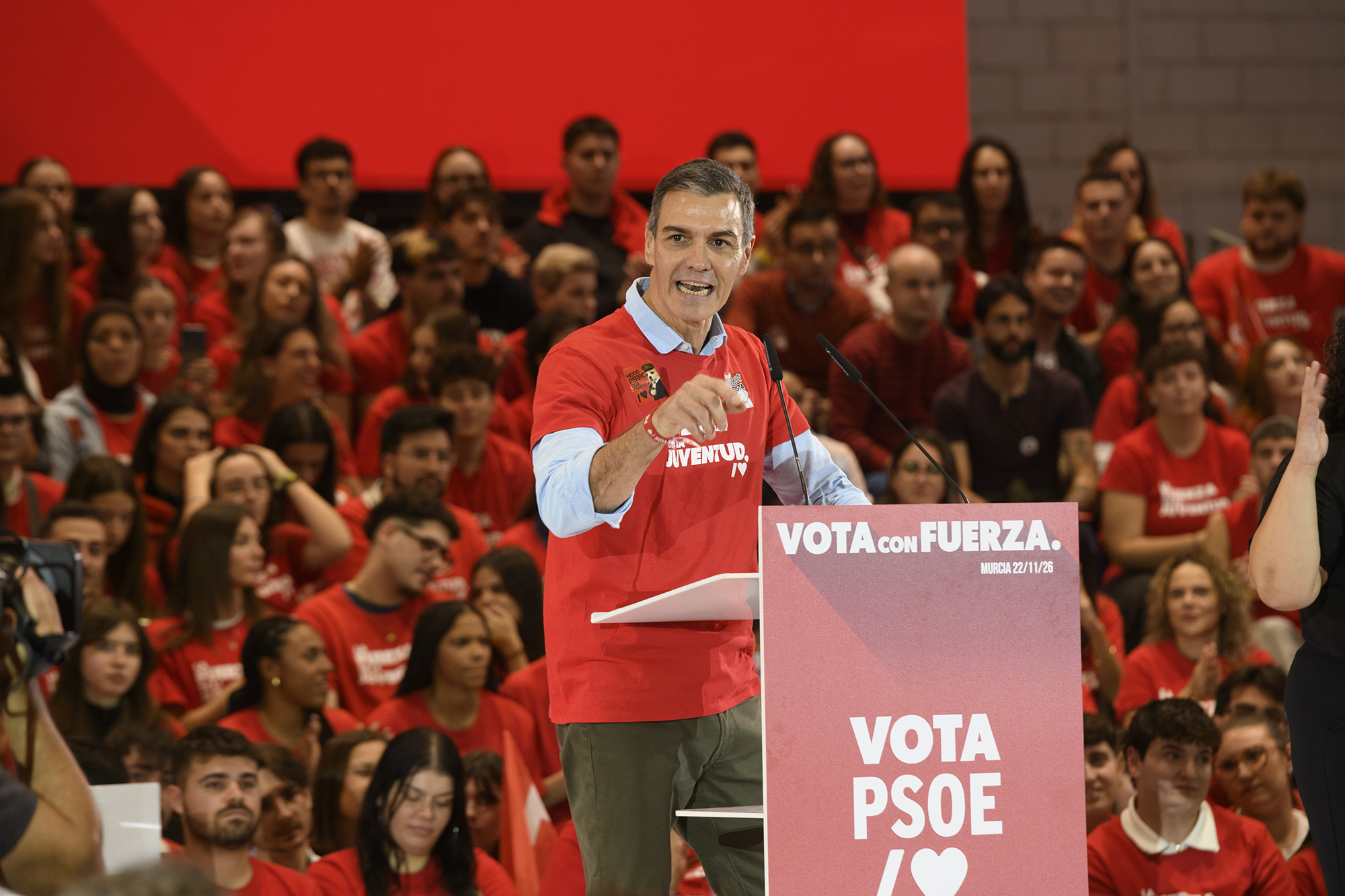
Photo: Pedro Sánchez at a rally (Getty Images)
What went wrong
Despite his extensive experience in political survival, Sánchez is facing much greater difficulties this time.
The key problem is that a significant part of the population is tired of eight years of socialist rule. Although Spain’s economy has grown at a fairly strong pace under Sánchez’s government by EU standards, unresolved problems continue to affect the socialists’ ratings. This is compounded by a series of corruption scandals, including ones involving Sánchez’s wife and brother.
Against this backdrop, the opposition right-wing parties are making the most of their advantages. People’s Party leader Alberto Núñez Feijóo combines anti-corruption rhetoric with efforts to win votes from the center and from disillusioned Socialist Party supporters. On housing, the PP is focusing on new construction and tax incentives for young people.
Meanwhile, Santiago Abascal and Vox are appealing to the more right-wing electorate with calls for deregulation, benefits for homebuyers and prioritizing Spanish citizens in housing policy. The party is also relying on anti-immigration rhetoric.
The election’s uncertainty
A right-wing victory does not look 100% inevitable. But the socialists will also have to give everything they can to remain in power.
The socialists’ junior ally, the left-wing Broad Front alliance, formed around forces that previously belonged to the Sumar bloc, risks winning significantly less than it did in the last election. Polls give it just over 5% of the vote, or around 10 seats, compared with the 31 seats held by Sumar in the current parliament.
Some small and regional parties are not interested in an alliance with the right and could join the socialists. However, the positions of some of them, including the Catalan party Junts, are also weakening. These votes may simply not be enough to offset a potential PP–Vox majority.
High voter turnout in Spain has traditionally favored the left. Right-wing voters have historically been more disciplined and more consistent in turning out, while the left-wing electorate is more sensitive to mobilization efforts. The 40dB poll records a high overall willingness among Spaniards to vote — higher than in 2023 — and nearly 70% of respondents describe the current campaign as particularly important.
Thus, this time high turnout may also be accompanied by mobilization among opposition voters, meaning that an increase in turnout alone may not be enough for the socialists.
Ultimately, the possibility of another minority government in Spain cannot be ruled out. But whether it will be led by Sánchez or someone else will be decided soon.